Showing posts with label sailing school. Show all posts

Thursday, September 15, 2022

Sailing vs Cruising: What is the Difference?

The sea, ocean, rivers, and most water bodies are natural wonders that have been a crucial part of humans’ lives over the years since time immemorial because of their usefulness and versatility. These various water bodies can be used as a valid means of transportation, recreational activities, sporting activities, even generating electricity, etc. Under the recreational and sporting activity, boating is a relevant part. Sailing and cruising can be seen as subgroups of boating in general. What is boating generally? Boating can be defined as the act of using a boat to travel on water not just for recreational purposes but also for activities such as fishing, water sports, among other things. Sailing vs cruising, which are both terms under boating, tend to be frequently mixed up because of the similarities they share. However, they are two different terms, and the distinct features will be discussed in this writeup.

What is Sailing?

Firstly, the keyword here is “sail.” What is a sail? A sail is a piece of fabric attached to a boat that is arranged in such a way that it causes the wind to drive a boat. The sail may be attached to the boat through a combination of mast, spars, and ropes. Relatedly, sailing is an activity done on a sailboat. It involves using the wind, windsails to steer the boat on a body of water, ice, land, or any place that is “sailable” to reach a certain destination. As clearly seen in the description given above, sailing is not necessarily confined to water areas for navigation. Sailboats are specifically designed so that when sails or a sailcloth is attached to them, maneuvering the sailboat becomes an easy task. This process will be further discussed later.

What is Cruising?

Wikipedia defines cruising aptly. It refers to cruising by boat as an activity that involves living for an extended period on a vessel, usually a boat, while traveling from place to place for pleasure. Depending on the kind of cruise you are going for, there are several types of boats one can use for such recreational adventure. For instance, powerboats which are built for speed and thrills, are one type. Also, sailboats discussed earlier can be used for cruising in general. This shows that the term “cruising” is a wide term that covers even sailing. Generally, cruising attracts people more than sailing because of the fun, entertainment, and the thrill involved, and the fact that it is a very effective means for stress relief.
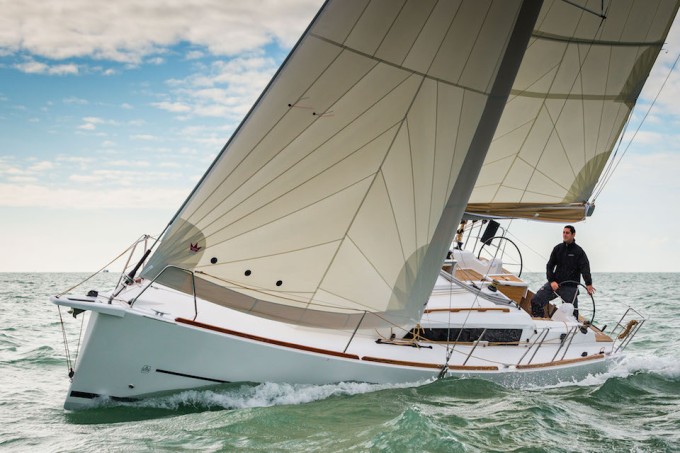
Dufour 61

What Are the Differences Between Sailing and Cruising?

Trip Distance

First, most sailboats are not built for long-distance voyages on the sea, ocean, or any other relevant water bodies. Therefore, it is only natural that they can travel on such waters for a short period. Besides, sailing as a recreational activity is usually done within a limited area where wind frequently blows, which makes steering really easy. Second, by contrast, cruising usually involves taking longer trips ranging from days to weeks depending on the destination(s) and the aim the rider is trying to achieve. This is because most times, a cruise usually involves more than one destination and location. Additionally, cruising boats that are mostly powered by engines are designed to easily achieve long-distance cruise travels.

Boat Size and Specifications

Generally, cruise boats are usually larger than sailboats. Note that this is just a general perspective, and there are valid exceptions. For instance, sailboats can sometimes be used for cruising purposes, as referenced earlier. Regardless of that, most cruise boats are designed to be big and perform multi-functional tasks. Luxurious cruise boats might even be large enough to contain pools, spas, and other features for the purpose of relaxation throughout the cruise. Sailboats are usually mini-crafts that are lightweight.
This is because they are usually built with the intention of letting the wind easily steer them. Although, there are a few exceptions, such as yachts that are large sailboats. Another difference is the boat specifications. Sailboats are usually steered manually with the help of winds. So most times, they lack mechanical engines. On the contrary, cruise boats are usually built with powerful engines that run on diesel. They usually generate winds and a certain sense of thrill because of the speed they produce.

Crowd Space

Obviously, it can be deduced from the past reasons given above that a sailboat will have little accommodative space because of its size. Generally, a sailboat’s capacity should range from 25-to 150 persons. In reverse, cruise boats are usually designed to hold a large number of people who go on a cruising expedition. A cruising boat’s capacity can range from 500(five hundred) to about 5000(five thousand) because of its size. A cruise boat can perform so many different functions for the people on board, and these are some of the few reasons that make cruise rides really enjoyable.

Cost

An unspoken fact in the boating world is that bigger is always far more expensive. This can also be applied to cruise and sailboats. A sailboat isn’t cheap, but it does not incur unnecessary expenses. A person interested in buying a solid sailboat can buy them within the price range of 20000(twenty thousand) dollars to 60000(sixty thousand) dollars. By opposite, sizeable are insanely expensive. They can range from 2,000,0000(two million) dollars to 1.2 billion dollars. Cruise boats are rarely bought for personal purposes, although they are sometimes. They are usually rented for recreational purposes.

Entertainment and Fun Factor

In a sailboat, due to the closeness to natural factors such as winds, the occupants use the opportunity to feel nature and have some other form of entertainment depending on the people on board and what they want. However, the fun and entertainment in a sailboat is usually not very lush. By contrast, most cruise ships/boats are literally designed for entertainment and other pleasures one might want to take part in the vessel. For instance, pools and spas which help with relaxation are usually on most cruise ships. Is it luxurious meals that will whet the appetite of the riders on board? They are usually commonplace on cruise ships. They usually range from fast food shops to even five-star restaurants depending on what you want and what you can afford. Sometimes, the riders get to see live shows, musical performances, and even famous productions starring popular actors.

Scheduling

Without rules, things tend to go haywire, and unplanned scenarios with negative effects tend to occur. Cruise ships embody these rules. Although cruise ships are filled with fun stuff and are entertainment-based, there must be a framework that guides the occupants. Cruise ships are usually specific about the dos and don’ts on board so that everything, including schedules, will work in a streamlined manner. So, in general, on a cruise boat, there is a very strict schedule to follow. By contrast, on a sailboat, there are few rules because of its simplicity. Most times, just the general rules of boating are followed to prevent drowning, deaths, and possibly wreckage.

Sailing vs Cruising: What is the Difference? – Summary

Therefore, as you probably understand now from the points above, sailing is completely different from cruising even though they are both terms under boating. In summary, sailing refers to riding specifically with sailboats, while cruising covers a wider set of scenarios.


News and Updated

Blog : http://universalyachting.blog.com/

WordPress : https://wordpress.com/stats/insights/universalyachting.wordpress.com

Livejournal : http://universalyacht.livejournal.com/

Google Plus : https://plus.google.com/+UniversalYachtingSouthampton

Twitter : https://twitter.com/universalyacht

Pinterest : https://www.pinterest.com/ussyachting/

Slideshare : http://www.slideshare.net/universalyachting

Wednesday, March 16, 2022

RYA Training in 2022


One of the primary aims for our sailing school was always to be able to offer clients the very latest in the range of Dufour Yachts which sat neatly alongside our role as UK Agents for Dufour Yachts.

Being able to offer the newest models available is extremely important to us and we always planed to continually update and replace our fleet as new models came on line.

One of the impacts of Covid was that we held onto our fleet for longer than planned. Subsequently lead times have extended for new boats and as a result we have taken the decision to step back from charter in 2022. This will allow us to plan the arrival of some new boats in 2023 and pick up where we left off.

Please do sign up to our news letters and we will keep everyone informed of our exciting plans for 2023 as they evolve.


News and Updated

Blog : http://universalyachting.blog.com/
WordPress : https://wordpress.com/stats/insights/universalyachting.wordpress.com
Livejournal : http://universalyacht.livejournal.com/
Google Plus : https://plus.google.com/+UniversalYachtingSouthampton
Twitter : https://twitter.com/universalyacht
Pinterest : https://www.pinterest.com/ussyachting/
Slideshare : http://www.slideshare.net/universalyachting


Sunday, July 18, 2021

Our sailing staycation: yacht charter after lockdown


Rob Peake enjoys getting afloat again after lockdown, with a day charter from the Hamble, on the cleanest yacht known to mankind…

Perhaps against the expectations of some, the safest holiday you can undertake in the world today is on a yacht. Yes, you still have to contend with the normal perils of life afloat – your G&T may spill as another boat’s wake sends ripples across your anchorage, and you might have to tweak the jib sheet more than once as you pootle round that nearby headland. Who knows, you might even have to reapply some Factor 50 after an afternoon swim off the bathing platform. Of course, in post-Covid world, what you really want to know is that the yacht you will find on your handover day will be clean enough to operate on. I don’t get halfway through this question, when we turn up at Universal Yachting on the Hamble, for our day charter of a Dufour 412, before fleet manager Steve reassures me.


Steve has in fact spent most of the last year scrubbing hard in between charters and covering not only Universal Yachting’s fleet of Dufours but also himself in the necessary anti-viral mist.

On board, all knives and forks are in sanitised plastic bags and similar measures have been taken for other implements. Any pandemic-induced neuroses can be dispelled. This is probably the cleanest, freshest boat we have ever been on.

Our children, aged 7 and 10, disappear down below to explore the three cavernous cabins and a multitude of lockers, while Steve gives my wife Kathy and I the handover chat. We’re only out for a day, so he doesn’t give us the long version reserved for week charters – and we pay close attention because our own sailing together has been on a 1980s Moody, not a modern Dufour that comes bristling with the latest systems. Steve has been kind enough to switch on and set up everything that we’ll need for the day, from batteries to plotter. We take note of the basics – VHF, emergency kit and heads procedure.

And then there is nothing for us to do other than to work out how to get this good-as-new, quarter of a million-pound yacht that belongs to someone else out of the marina without an embarrassing mishap.

Both Steve and company boss Chris has given excellent advice on coming in and out of Mercury Yacht Harbour, but the Dufour is a typically massive modern yacht and we know its high side decks will cause more than a bit of windage.

We give the bowthruster a few trial squirts, leave go the lines and motor on out. We have with us Kathy’s mum, Sue Heaser, who is here partly as a thankyou for having had the kids to stay for the past week, but mostly because she’s a far better sailor than either of us.

Sue has the helm and steers the boat out into the river easily. No mishaps, the sun is shining and we’re in the Hamble, which for sailors new to the area is an attraction itself. Sue and Kathy, both lifelong east coasters, enjoy watching ‘the cradle of yachting’ slide past to port and starboard. Jolie Brise is a highlight, neatly moored up as we motor downstream.

It’s a glorious Friday and the Solent is empty. With the help of 10-year-old Miles, who is self-appointed chart-plotter, and seven-year-old Amity on the wheel, we take an easy route towards Osbourne Bay. The twin wheel set up on the Dufour means an adult can steer on one side, while a youngster gets the hang of it on the other. The deck and cockpit space are huge and really this boat, with eight good berths down below, could take two or three families easily. We spread ourselves out luxuriously and settle down for a rare day afloat. It’s been a while, mainly due to parenthood rather than lockdown, since mum and dad have sailed together. In the old days, pre-kids, we found it worked best with Kathy as skipper, while I did nav, ropes and tea. We settle into the old routine and all works fine.


There is, of course, the inevitable rustiness that comes after a long period ashore – and in 2021 after almost an entire year ashore – but luckily granny Sue has been enjoying some more regular sailing on Arthur Ransome’s Nancy Blackett on the River Deben.

Universal Yachting are keen to attract people who are newer to sailing and may want a skipper. No problem – they can provide. Their ‘Pop Up’ days are designed to get new sailors afloat, particularly as the pandemic persuades many people that sailing is a good option if they can’t fly to the Algarve. Unsurprisingly, Universal Yachting are already getting booked up for the summer ahead.

Nobody needs explaining how perfectly well-suited UK chartering is to the idea of bubbles, social distancing and not being able to fly. And us Brits are blessed, of course, with some of the finest coastline in the world. Not all of it, admittedly, lies in the Solent, but as we near the Isle of Wight things get decidedly more scenic.

We potter round below Norris Castle and into Osbourne Bay, to join a handful of other yachts anchoring there for lunch.Universal Yachting’s charter party the day before had apparently tacked all the way up the Beaulieu and explored their way up the Medina too, before arriving back at base after nine hours underway. That’s getting your money’s worth. It’s true that the Solent is ripe for exploring, with plenty of places off the beaten track, and plenty on it. We have a more leisurely time in mind. After sandwiches and coffee, we raise the anchor on the electric windlass and slowly get underway again. We pootle past Cowes and take a right turn after the Brambles cardinal, heading home while enjoying more Solent sights.

Not an ambitious trip by anyone’s standards, and all the better for it! The two children have loved their first day on a ‘megaboat’ and mum and dad have got the wind in their hair again after almost a year without getting afloat.

For more on Pop Up Sailing Days with Universal Charter click here.

News and Updated

Blog : http://universalyachting.blog.com/

WordPress : https://wordpress.com/stats/insights/universalyachting.wordpress.com

Livejournal : http://universalyacht.livejournal.com/

Google Plus : https://plus.google.com/+UniversalYachtingSouthampton

Twitter : https://twitter.com/universalyacht

Pinterest : https://www.pinterest.com/ussyachting/

Slideshare : http://www.slideshare.net/universalyachting

Facebook : https://www.facebook.com/universalyachting/

Tuesday, January 14, 2020

Boat Ropes, Sailboat Terms, Rigging and Sailing Terminology

If you have just had your first outing on a sailing yacht and are bemused by some of the names that all the different ropes are called? Well here is a quick explanation as to why rope is not just called rope! Rope is generally the term used for the raw material used to make the ‘lines’ that we use on board a sailing yacht. For rope terminology wherever a rope has a purpose or use, it is called a ‘line’ and every single line that has a job to do will have it’s own name!

Running Rigging
This refers to all the moveable lines that are used to pull up and adjust the sails. The rope that runs up the mast to pull up the mainsail is called the halyard and to bring the sail down the line is called the downhaul.


Standing Rigging

The Standing rigging refers to all the lines that support the stationary objects on a sailing yacht, such as the mast. These are generally steel cables and are called either ‘shrouds’ or ‘stays’.


Mooring up

The lines that are used when you are tying up to a jetty or pontoon are often called ‘docklines’ or ‘warps’ There only a couple of examples of lines that are actually called ropes on a yacht; a ‘bolt rope’ a line which can be attached to the edge of a sail or even a ‘bell rope’ used to ring a ships bell! So there you have it, clear as old rope?


See Boat Ropes, Sailboat Terms, Rigging and Sailing Terminology for further details .  

 
News and Updated Blog : http://universalyachting.blog.com/ WordPress : https://wordpress.com/stats/insights/universalyachting.wordpress.com Livejournal : http://universalyacht.livejournal.com/ Google Plus : https://plus.google.com/+UniversalYachtingSouthampton Twitter : https://twitter.com/universalyacht Pinterest : https://www.pinterest.com/ussyachting/ Slideshare : http://www.slideshare.net/universalyachting Facebook : https://www.facebook.com/universalyachting/

Wednesday, July 20, 2016

Your bluewater cruise of a lifetime – making it a reality!

Many people only dream of taking off on their yacht and sailing away over the horizon for their bluewater cruise of a lifetime! When Julian and Lynne Ronnie decided they wanted to do just that, they felt they would benefit from enhancing their sailing skills first. So they contacted Universal Yachting on the best way to prepare for their trip. We helped Julian and Lynne choose the right RYA training courses and set up some bespoke training working on specific sailing skills. 

Julian takes up their story. “Our bucket list included crossing the Atlantic, and we signed up for the ARC which gave us eighteen months to learn all we needed to learn. We did a number of RYA courses with Universal Yachting, including Day Skipper for Lyn, and Coastal Skipper for me. The great thing was that we were able to do it on our own boat with just the two of us on board plus the instructor. This meant that nothing we learnt was simply theoretical or suitable for a different boat or with more crew. 

verything we were taught applied directly to us. And of course with such direct one to one supervision we were able to cover much more than is strictly in the RYA syllabus. Clive, our instructor, was able to show us MOB procedures for double handed sailors (of course you are single handed if one of you is over the side.) Fortunately we haven't needed that one! But also we covered picking up mooring balls, and berthing short handed, and even putting up the cruising chute. When you are learning to sail, nothing of course beats sheer experience and hours at sea, but doing these courses certainly speeded up the process.” 

The Ronnie’s set off from the Solent in the summer of 2014, took part in the World Cruising Club ARC Rally. They have been cruising the Caribbean and around the shores of the United States ever since. Make a bluewater cruise your reality! Find out about the right RYA training course for you. Read more about the Ronnie’s amazing voyage on www.theboatblog.com


Tuesday, April 19, 2016

10 Fascinating Facts about the Volvo Ocean Race 2014-2015

If you love yachting as much as we here at Universal Yacht Charter do, then we are sure you will be as excited as we are at the start of the Volvo Ocean Race on October 11th.

Read Our 10 Fascinating Facts About The Volvo Ocean Race Here….

  • 15001572937_2aa99ecc60_z-300x210The Volvo Ocean Race was formerly known as the Whitbread Round the World Race and is held every 3 years.
  • The first race of this globe-circling regatta was in 1973 and started in Portsmouth, United Kingdom on the 8th September.
  • The original course was designed to follow the route of the original square riggers that in the 19th Century, carried cargo around the world.
  • In 2001 the sponsorship was claimed by Volvo and renamed, this also introduced more stopover ports in Sweden, France and Germany.
  • There is no cash prize for winning the race! Just the glory and accomplishment achieved.
  • 11731530184_351a13df5a_z-300x225The Southern Ocean is generally where the worst weather conditions are encountered with 100 foot waves and wind speeds of up to 60 knots!
  • The 2014-15 race is the longest route in the history of the race – covering four oceans, five continents and 38,739 nautical miles!
  • It’s the longest sporting event in the world – lasting up to 9 months
  • The race takes in 11 ports, starting in Alicante, Spain and finishing in Gothenburg, Sweden
  • For the first time since 2001, one of the seven teams is the all-female Team SCA.
See more: www.universalyachting.com

Thursday, March 3, 2016

Navigate your way through the multitude of training opportunities!

gc_DUFOUR350_2014_2273-500x333

The old adage that ‘you never stop learning’ could not be more applicable than to sailing. Whilst anyone can just get in a boat, it’s wise to get some training and experience before setting off over the horizon.
Recognised around the world, RYA (Royal Yachting Association) training courses and qualifications are designed to encourage high standards of seamanship and navigation.
Courses are delivered through over 2500 RYA recognised Training Centres across 49 countries. The RYA Tick Mark logo indicates Centres will have fully qualified instructors, suitable yachts conforming to MCA regulations, and appropriate safety management processes in place.
“Obtaining an RYA qualification means you have achieved a clearly recognised standard providing the practical skills and essential knowledge for your safety and enjoyment afloat,” comments RYA Training Manager, Richard Falk.  “The courses are designed to provide everything you need to learn safely and build confidence, giving a great foundation to go and build your experience on your own.”

Choosing a training centre

Having a clear idea of your sailing aspirations will influence where to learn. Whether your goals are day sailing with friends and family, charter sailing on the Mediterranean or blue water cruising around the World, picking the right venue and training is important.
Most commercial Training Centres offer a variety of courses throughout the year, and have a selection of boats for building experience. Many sailing clubs are approved Training Centres, although whilst courses may be lower cost, not all clubs have the range of relevant courses, dates and facilities available.
If your plans are only sailing in non-tidal waters such as the Med, courses at a holiday venue can be an easy start. Navigation and manoeuvring are definitely less complicated without the affects of tide. Learning in busy tidal, complicated waters, such as the Solent, dealing with a complete range of conditions and commercial traffic, will assist you to become a more competent, experienced and well rounded sailor. If you learn to sail in non-tidal waters there are conversation courses should you subsequently wish to gain tidal experience.


Which course for you?

The RYA Start Yachting and Competent Crew courses are both water based courses aimed at novices and do not require any previous experience.
Start Yachting:
Normally a two day course, you will achieve a basic knowledge of yachting, experienced steering a yacht, sail handling, rope work, rules of the road and be aware of safety and emergency procedures onboard. It’s a great way to establish if yacht sailing is for you, without investing too much time and money.
Competent Crew:
Typically 5 days this course is an introduction to cruising and teaches personal safety, seamanship and helmsmanship. It’s ideal for people seeking to step up from dinghy sailing, or who have tried yacht crewing and want to learn more.
The course includes yachting terminology, rigging and sails, ropework, fire precautions and fighting, man overboard, emergency equipment, meteorology, seasickness, general duties and manners. After the course you will be able to steer, handle sails, keep a lookout and be a useful crew. It can be completed in 3 days if you have already done Start Sailing.
20199045342_3c81968795_z
Move up the ladder
Once armed with the basic skills you will want to get afloat. Joining a club, taking part in cruising rallies, sailing with friends, there’s many ways to build your experience.
If you plan to own or charter a yacht, or sail with friends and family less experienced than you, the RYA offers further training stages – the RYA Day Skipper, Coastal Skipper, Yachtmaster Coastal and Yachtmaster Offshore. Each course progresses you to a higher level, enabling you to sail further afield and throughout the night.
Chris Warwick, MD of Universal Yachting based in Hamble comments “The courses are carefully pitched for different levels of expertise. You can enter the RYA scheme at any level, depending on your experience and abilities. The courses reinforce good practice, can fill in the gaps in your experience and knowledge, and are a quick way to refresh rusty skills – which can help boost confidence too!”
It is counter productive to attempt a course above your standard, as the courses assume, and suggest, a minimum level of pre-course experience.
Day Skipper:
An intensive 5 day course, and the minimum requirement to charter a yacht. It includes boat handling, sail selection, all aspects of being a skipper, pilotage, navigation, seamanship, weather forecasting, victualing and passage planning. Requirements:
5 Days sea time / 100 miles / 4 night hours
Navigation to Day Skipper – shorebased standard
Basic sailing ability
Many countries require sailors to have an ICC (International Certificate of Competence), which is the equivalent to the RYA Day Skipper.
The new Dufour 350
Ph: Guido Cantini / Dufour/Sea&See.com

Coastal Skipper:
This covers the skills and techniques required to skipper a cruising yacht safely on coastal and offshore passages by day and night. The requirements assume attendees will be competent sailors with a good knowledge navigation theory and meteorology:
15 Days sea time with 2 days as skipper / 300 miles / 8 night hours
Navigation to Day Skipper – shorebased standard
Competent / Day skipper sailing ability
Top of the class
Requiring considerably more pre-course experience, the next stages are the RYA Yachtmaster Coastal, Offshore and Ocean Certificates of Competence. These will thoroughly demonstrate your sailing abilities and can lead on to commercial endorsement and career opportunities. Whilst Training Centres will run Yachtmaster preparation courses, the qualifications are gained only by examination conducted by an independent RYA Yachtmaster examiner.
Alternative learning opportunities 
In addition to the formal RYA qualifications, we offer courses such as cross channel or long distance mile building cruises to build your experience,
For example, we offer a variety of bespoke courses where you can develop specific elements of your sailing expertise. A day spent on a sail handling can really help understand how to get the best performance from your boat upwind and downwind. And an own boat familiarisation or Boat handling courses are particularly helpful to focus on manoeuvring in tight spaces and parking.

Friday, December 18, 2015

How about a voucher for RYA Courses for a gift?

RYA Day Skipper Course
Struggling for present ideas for a keen or wannabe sailor?  How about one of our RYA Courses?
Do you know someone who has a secret hankering to do any RYA Courses? Well why not buy them a vouchertowards a RYA Course?
At Universal Sailing School we run a number of different courses, all of which would make an ideal gift for somebody who would like to get qualified in sailing.
Start Yachting CoursesStart Yachting Courses
We can offer the following courses for which you can buy gift vouchers for;
Start Yachting Courses – perfect for the complete beginner or for someone you know who would love to start yachting, but doesn’t know where to begin.
RYA Competent Crew – for those who want to learn how to be a useful and competent member of the crew
RYA Day Skipper – Learn how to safely take charge of a sailing yacht for a days charter.
RYA Competent CrewRYA Competent Crew
RYA Coastal Skipper and Yachtmaster qualifications – for the experienced yachtsmen, who wants to get even more qualified and has plenty of miles already.
Yacht Charter and Sailing Activities – If they don’t like the idea of a training course then they can join one of our sailing activity weekends.
- See more at: http://www.universalsailingschool.co.uk/rya-courses-vouchers-gift/